Jack Hughes corralled a pass in the slot, all alone early in a three-on-three overtime period, the outcome of the gold-medal game on his stick. The Team USA forward watched Jordan Binnington frantically slide across the crease, opening his five-hole. Hughes knew where to shoot and executed.
Hughes, whose older brother, Quinn, scored an OT goal to send the United States to a semifinal game in what turned out to be an epic men's hockey tournament in Italy, became an Olympic hero in that moment. He's the author of the 2026 "Golden Goal," the second coming of Mike Eruzione - who famously led the underdog Americans to gold in 1980 - and the bloody-mouthed dude responsible for breaking millions of hearts across Canada.
"I can't imagine what he was feeling in the box there at the end of the third," U.S. captain Auston Matthews said postgame on the Canadian broadcast, referring to Jack Hughes' high-sticking penalty with less than five minutes left in regulation.
"He's an incredible player, an incredible person, and that's just a big-time play at the end."
The 2-1 game played inside Milano Santagiulia Ice Hockey Arena on Sunday featured some of the greatest hockey of all time. The sport's two national powerhouses, filled to the brim with future members of the Hockey Hall of Fame, fought for every inch of ice for nearly 62 minutes. Canada blew a handful of glorious scoring opportunities in the third period, while the U.S. hung around long enough to capitalize on a grade-A chance of its own.
Canada captured gold at three of the previous five Winter Games that featured NHL players. The Americans lost in the Olympic final in 2002 and 2010, failed to reach the final at the 2016 World Cup of Hockey, and fell to Canada in OT at last year's 4 Nations Face-Off. Now? They're atop the hockey world - champions at last.
How the U.S. won gold
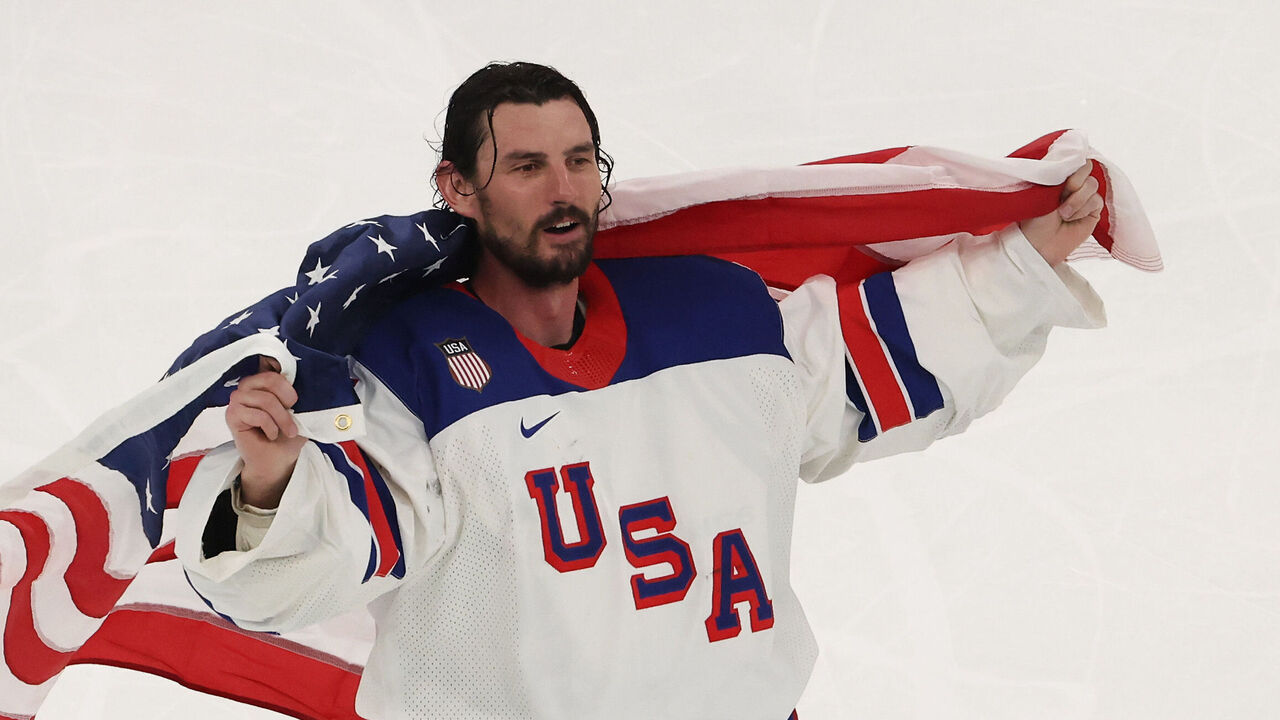
That was a narrative-flipping performance from goalie Connor Hellebuyck.
The three-time Vezina Trophy winner, who entered Sunday with an underwhelming big-game resume, not only stopped a tremendous volume of shots (41 of 42) but also outdueled Canadian shooters in high-leverage moments. Hellebuyck faced a whopping 27 shots from the slot, a breakaway each from Connor McDavid and Macklin Celebrini, and a flurry of nervy activity in the second period during a 5-on-3 power play for Canada.
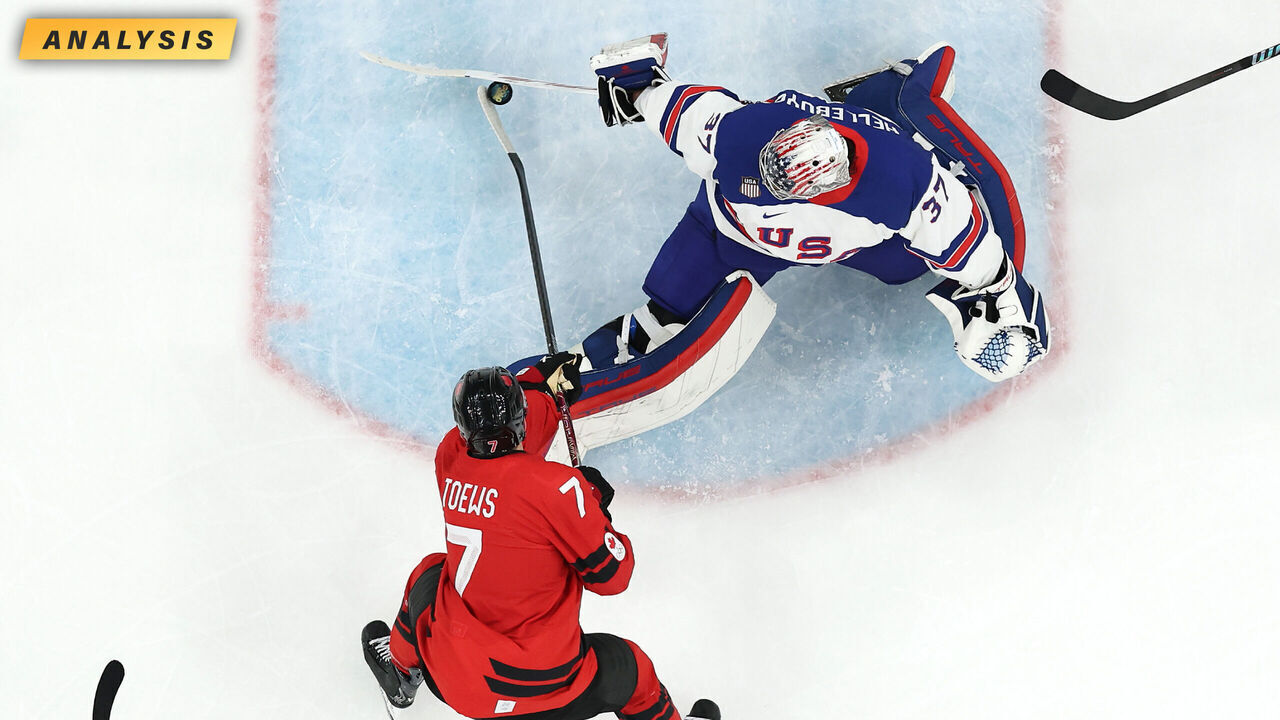
No save compares to the last-ditch effort made on a Devon Toews chip at the goalmouth early in the third. Hellebuyck, a so-called "big and boring" netminder not known for his athleticism, lunged to knock the puck out of harm's way with the paddle of his stick. Stone cold - as if he'd practiced the exact movements countless times as a kid in road hockey equipment.
As the game wore on, Canada kept missing the net, perhaps in response to Hellebuyck's intimidating positioning and rebound control. He outsmarted three of the top four NHL scorers in McDavid, Celebrini, and Nathan MacKinnon.
The U.S. started the tournament slowly, geared up in the quarters, took care of business in the semis against Slovakia, and peaked in the final game.
The same can be said for Jack Hughes, who began his first Games on the fourth line. He bought into coach Mike Sullivan's plan for him, played his heart out as a secret weapon in the bottom six, and was rewarded with a shift early in OT during the final. The electric Devils superstar overcame several long-term injuries in the years leading up to his golden moment in Milan.
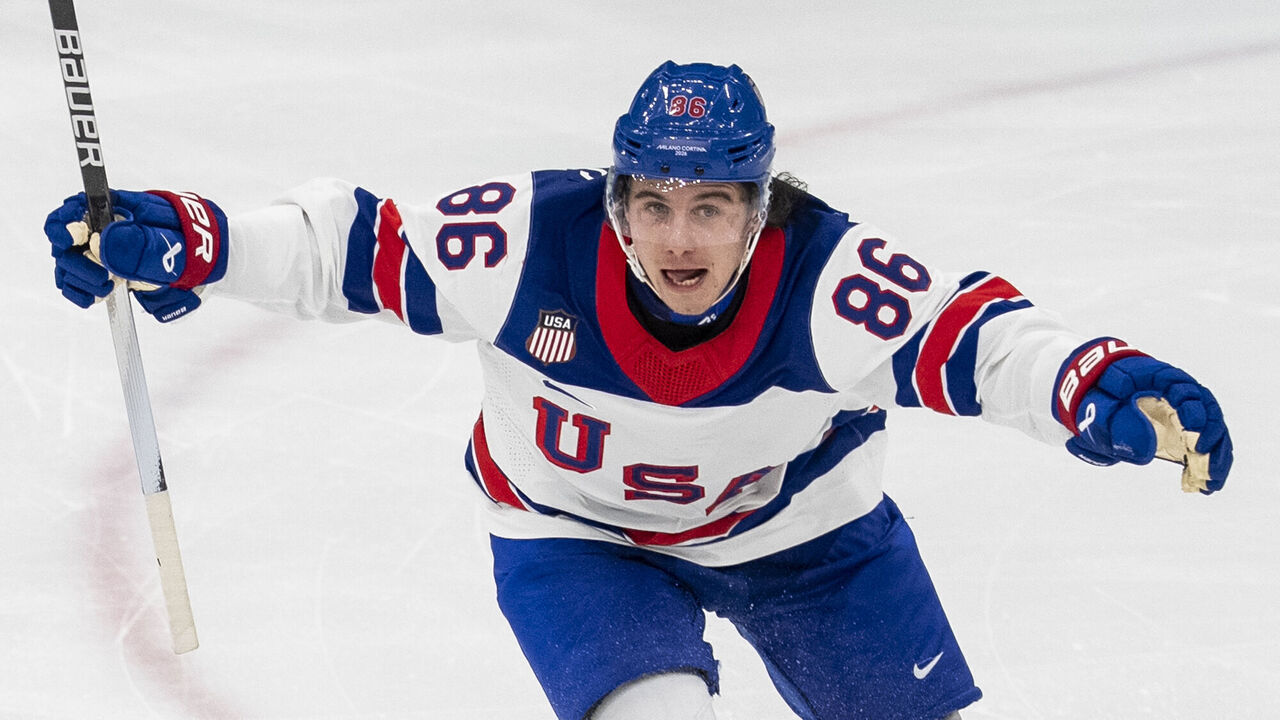
Matthews, maligned for years in Toronto for not rising to the occasion in the NHL playoffs, finished with seven points. He put on a defensive clinic Sunday.
"It doesn't matter what anybody says now," Jack Hughes told reporters. "Auston Matthews is a winner. Auston Matthews is an Olympic gold medalist."
Other standouts on the most talented American team ever assembled included leading scorer and No. 1 defenseman Quinn Hughes (who, along with Hellebuyck, was named an Olympic All-Star), top-line forwards Jack Eichel and Brady Tkachuk, and heart-and-soul third-line center Dylan Larkin.
Seventeen of the 25 Olympic team members spent at least one season at the U.S. National Team Development Program in Michigan. The NTDP, a one-of-a-kind incubator in the sport, brings together the top teenage players from across the country with the dual goal of developing long-time NHLers and fostering a national team environment. It breeds off-ice friendships and on-ice chemistry and helps build a unified U.S. culture and playing style.
That family vibe shined through in the moments after Jack Hughes' goal, as Matthews, Zach Werenski, and Matthew Tkachuk trotted around the rink holding Johnny Gaudreau's No. 13 jersey proudly. The late Gaudreau didn't play at the NTDP, but he was a Team USA regular and close friend to many Olympians.
The Americans were a perfect 17-for-17 on the penalty kill and dominated in the faceoff circle. Vincent Trocheck, a heavily scrutinized selection ahead of the Games, saw plenty of shorthanded ice while winning 66.7% of his total draws.
"I'm pretty f-----g proud, I'll be honest. Yeah, we heard all the talk, that (me and fellow struggling Rangers forward J.T. Miller) shouldn't be here," Trocheck told reporters. "We had a job to do, and it was to be good penalty kill guys, faceoff guys, character guys. We took that role, and we ran with it."
Team USA general manager Bill Guerin was unapologetic in the face of widespread criticism ahead of the Olympics. No Cole Caufield, no Jason Robertson, no Adam Fox, no problem, apparently, as the U.S. grinded its way to glory in a high-paced, physical, dump-and-chase tournament.
What silver means for Canada
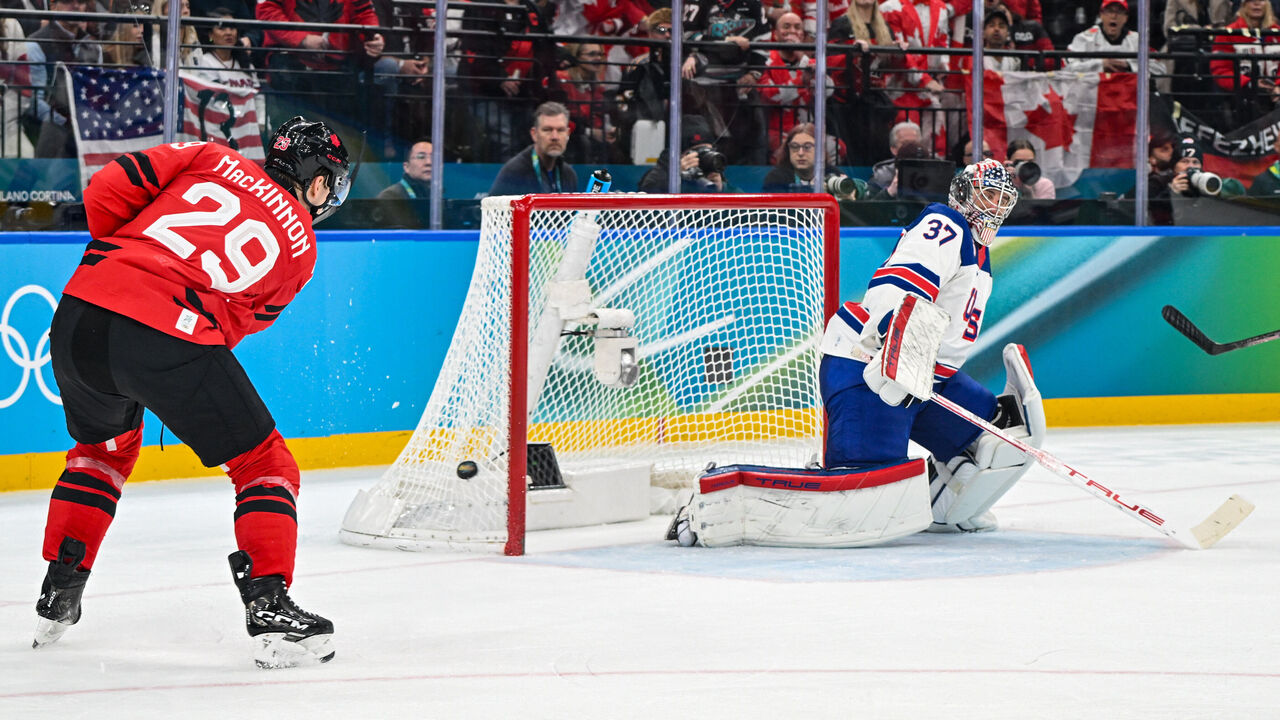
Canada controlled the second and third periods and, on the whole, strung together a gold-worthy performance Sunday. A lack of execution in gut-check moments, which wasn't an issue during the team's five other games in Italy, ultimately did coach Jon Cooper's squad in.
Hellebuyck deserves a ton of credit, in general, and especially for the diving stick save on Toews. But there's a long list of what-ifs that will haunt Canada's players and coaches, plus the millions who watched intently in bars and living rooms from across the Atlantic Ocean, for the foreseeable future.
What if Canada had turned one of many excellent looks on its five-on-three in the second period to even the score earlier in the game? What if, with 10 minutes left in regulation and the game knotted at 1-1, MacKinnon didn't strike the side of the net with the puck despite being uncovered and staring down a yawning cage? What if the U.S. actually got penalized for having too many men on the ice soon after? What if MacKinnon didn't miss the net again later in the third? What if? How come? Why?
MacKinnon, the consensus No. 2 player in the world behind McDavid, had a strange tournament. He didn't play poorly and finished with seven points, sniping the game-winning goal during a come-from-behind victory over the Finns in the semis. But he also didn't look entirely himself, having to skate on McDavid's wing instead of driving his own line and then whiffing in the final.
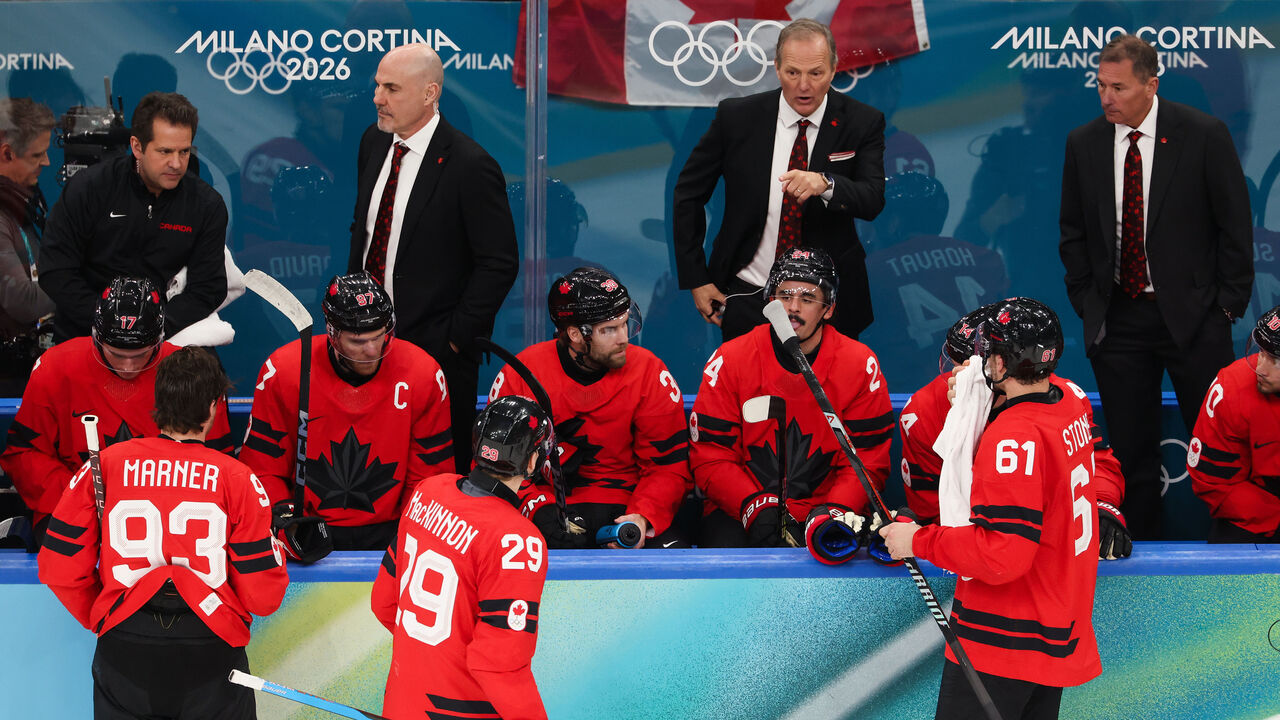
There'll be plenty of blame placed on GM Doug Armstrong in the wake of the loss, which is a little unfair given that Canada was inches away from gold after thoroughly outplaying its opponent in a final that required extra time.
That said, complaints about Armstrong not selecting another dynamic defenseman - Matthew Schaefer or Evan Bouchard - aren't without merit. Canada was down to three offensively gifted blue-liners in Toews, Cale Makar, and Thomas Harley after Josh Morrissey went down with an injury in the opener. The puck died on the sticks of the club's depth defensemen, namely Travis Sanheim and Colton Parayko, far too many times in the knockout stage.
Canada was forced to play its last two games without second-line center and undisputed leader Sidney Crosby, which sucks for the 38-year-old on a personal level, not to mention it removed an unflappable killer from the forward group. Would Crosby have missed chance after chance?
McDavid, named tournament MVP after setting a record for most points by an NHLer in a single Olympics, did everything in his power throughout six commanding outings. He wasn't the problem. The 19-year-old Celebrini, also a tournament All-Star, was absolutely incredible - not the issue. Binnington played about as well as he's capable of - not the goat here.
The top of the international hockey pyramid has never been more crowded. After emerging victorious at the 2010 Olympics, 2014 Olympics, 2016 World Cup, and 2025 4 Nations, Canada was bound to lose at some point during best-on-best competition, either by being outplayed or not getting all the bounces in a tight final.
There's no silver lining when the result is a silver medal. Still, no national summit is necessary here. Just a few days to grieve a devastating loss.
John Matisz is theScore's senior NHL writer. Follow John on Twitter/X (@MatiszJohn) or contact him via email ([email protected]).