
Combining his own perspective with what he's been hearing from those in and around the game, senior NHL writer John Matisz breaks down the hot topics across the hockey landscape.
Most impactful deadline-week deals
Bobby McMann, whom Seattle acquired from Toronto at the trade deadline, buried his sixth goal in seven games Thursday during the Kraken's 4-3 overtime win versus the Lightning. The speedy winger is leading the attack and setting himself up for a hefty raise as a pending unrestricted free agent. But for what? Seattle's currently three points behind the playoff cutline in the Western Conference.
Below are the most impactful deadline-week pickups among playoff teams.
Nazem Kadri: The league-leading Avalanche were shopping for a middle-six center who could accentuate their strengths. No one on the trade block fit the description better than Kadri, the former Av who was a key member of the 2022 Stanley Cup team, and the rebuilding Flames were happy to off-load the 35-year-old.
Kadri's return to Denver has been seamless. Lining up both down the middle and on the wing, he trails only Nathan MacKinnon and Martin Necas in points since being traded (two goals and four assists for six points in 10 games). Most crucially, Kadri's injected life into a perplexingly bad power play that also features MacKinnon, Necas, Cale Makar, and Brock Nelson on its top unit.
Colorado's power play prior to the Kadri trade: 5.4 goals per 60 minutes, ranking 32nd out of 32 teams. Its power play after the trade, with Kadri assuming a playmaking role from the right flank: 7.8 goals per 60, ranking 14th.

John Carlson: Coach Joel Quenneville has thrown Carlson into the deep end, and the 36-year-old blue-liner is enjoying every minute of it. He's recorded six points in six games while averaging a team-high 24:20 per night. His latest contribution: a crafty primary assist on Mikael Granlund's one-timer with six seconds remaining in overtime Thursday.
Carlson, a 17-year veteran who had previously played only for the Capitals, has taken five-on-five shifts with all three of the Ducks' young lefties (Pavel Mintyukov, Olen Zellweger, Jackson LaCombe) to start his tenure. The Pacific Division-leading squad was desperate for mobility and puck-moving chops on the right side. Carlson's been aggressive, pinching and joining the rush often.
Things are going so well that the pending UFA could very well re-sign.
Conor Garland: Columbus has strung together a 6-2-3 record since acquiring Garland from Vancouver for second- and third-round picks. The feisty top-six forward has undoubtedly raised the surging club's ceiling.
Garland's a play-driving winger who distributes the puck well and wins a ton of board battles despite his size (5-foot-10, 165 pounds). He's recorded five goals and an assist in 11 games while skating for 12:41 a night. The Blue Jackets have outscored the opposition 5-3 and owned 56% of the expected goals in the 101 five-on-five minutes Garland has shared with center Sean Monahan.
The Canucks didn't receive a first-round pick for Garland because his six-year, $36-million extension (which includes a no-movement clause) doesn't kick in until next season, and he's already 30 years old. How will the deal look in Years 4-6?
Norris Trophy: Choose your fighter
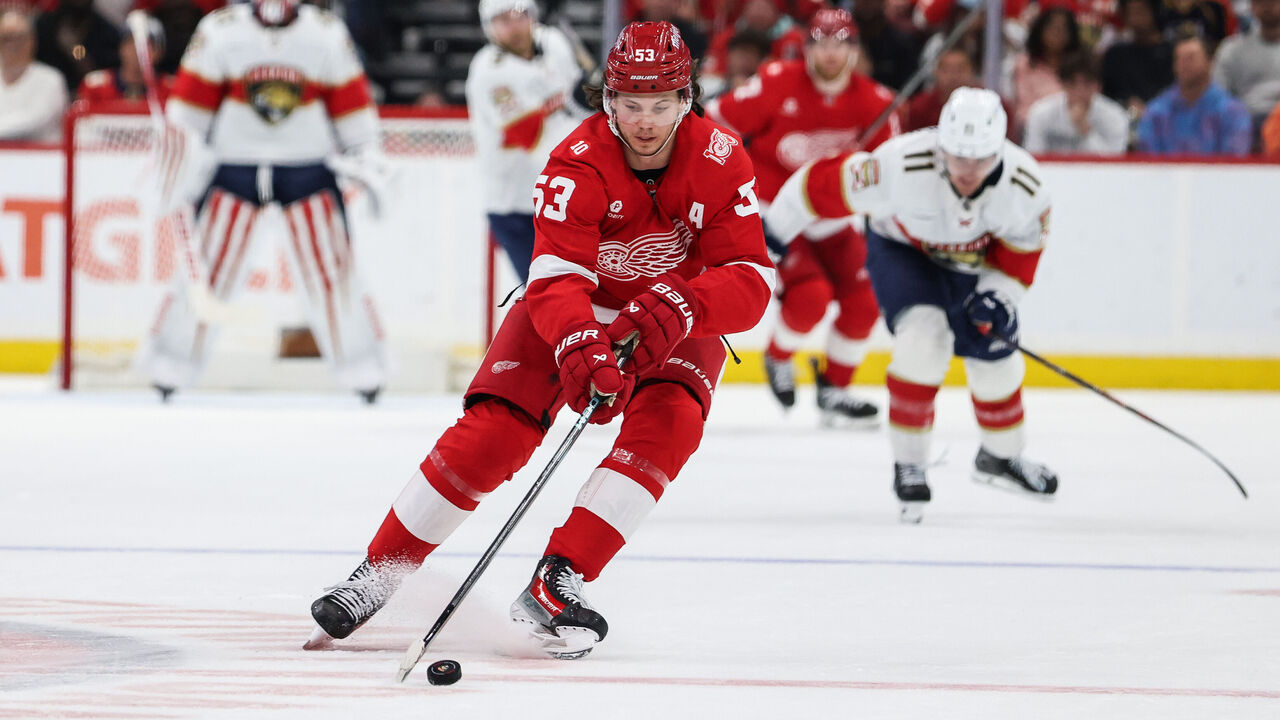
I can't recall a year in which there were so many defensemen with legitimate cases to either win the Norris Trophy or earn one of the two other finalist nods.
It reminds me of the old "Mortal Kombat" video games. Choose your fighter!
Using five words or less, here are the cases for eight (unranked) contenders.
- Evan Bouchard, Oilers: best offensive defenseman
- Moritz Seider, Red Wings: best defensive defenseman
- Rasmus Dahlin, Sabres: significant three-zone impacts
- Quinn Hughes, Wild: most influential shift to shift
- Cale Makar, Avalanche: best all-around defenseman
- Lane Hutson, Canadiens: slightly lesser version of Makar
- Zach Werenski, Blue Jackets: most valuable to own team
- Matthew Schaefer, Islanders: slightly lesser version of Werenski
Lightning, Hurricanes, then who?
Like most of us, a front-office member of an Eastern Conference team is still wondering what to make of the East field beyond Tampa Bay and Carolina.
"It's almost impossible to distinguish who the third-best team is," the staffer said. "There's an argument to be made that any team can be the third - Columbus, Boston, Montreal, Buffalo, Detroit, Pittsburgh, or the Islanders."
They made that comment before the Senators' playoff odds improved. The club boasts sparkling underlying numbers, and struggling starting goalie Linus Ullmark is fresh off two strong outings. Then again, the blue line is banged up.
We know roughly what to expect from the Lightning and Hurricanes, thanks to recent history. The others present flawed rosters and youthfulness. The Sabres would be my vote for third-best team, with the Blue Jackets not far behind.
Preds' bright spots: playoffs and Wood
The Predators executed a soft sell around the trade deadline, swapping pending UFAs Michael Bunting, Michael McCarron, and Nick Blankenburg for draft picks. The Andrew Brunette-coached squad has responded by putting together a 6-3-1 record to grab the West's second wild card.
Matthew Wood, selected 15th overall in 2023, is one player who's taking advantage of the team's depleted talent pool. The 21-year-old rookie center is logging an extra two minutes per night since the deadline, skating alongside offensive catalysts Filip Forsberg and Jonathan Marchessault on the second line. The Preds have outscored the opposition 5-1 in the trio's 66 five-on-five minutes together.
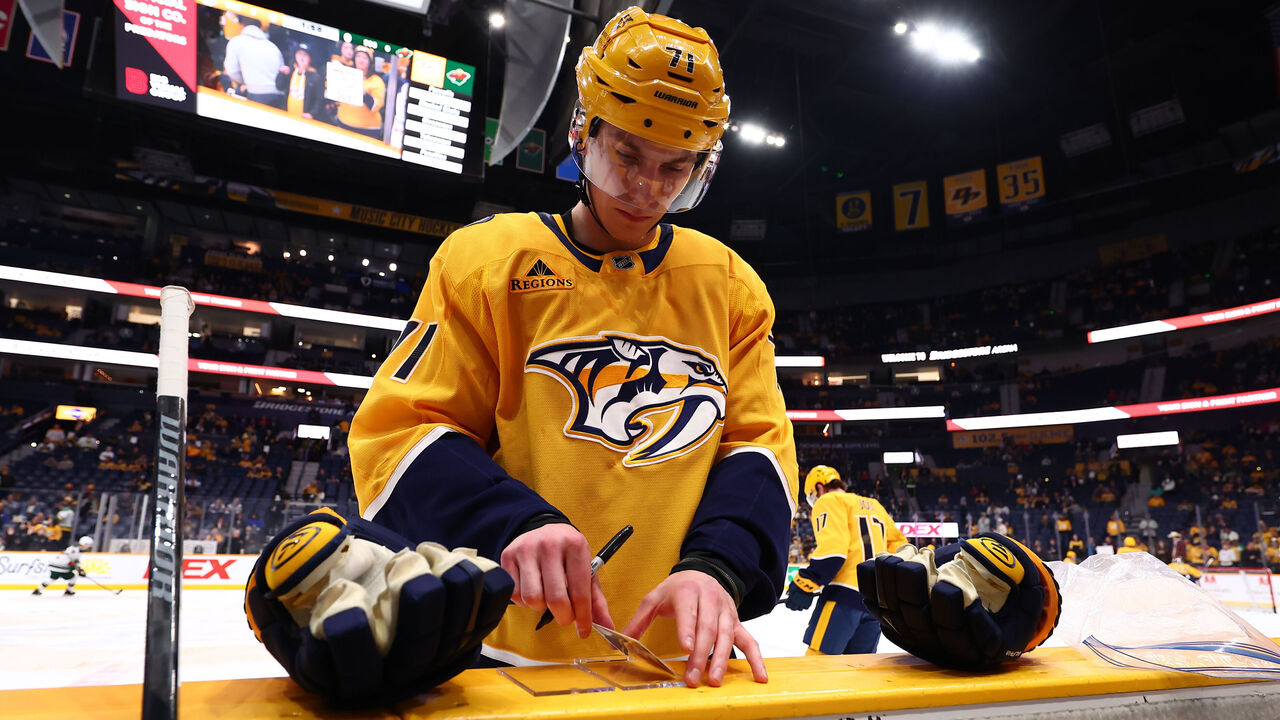
Nashville is banking on Wood blossoming into a needle-moving center despite him alternating between center and wing at lower levels. I'm told Brunette really believes in him. Heck, the raw package is enticing: Wood is 6-foot-4 and 202 pounds, capable defensively, and a clever playmaker. Plus, he can rifle the puck.
"He has a good flair for what's coming up ice when he has the puck," Marchessault told reporters Tuesday.
The veteran added, "A lot of people would dream to have a big right-handed centerman like him - and a goal-scorer. Definitely lucky to have him."
Wood, who's registered a modest 16 goals and 10 assists in 61 games, was criticized for poor skating during his draft year. It's gradually improved over the past three years partly due to his work with private skating coach Brett Strot.
Playing center helps as well. In the defensive zone, centers cover a wide area, forcing them to constantly move their feet, whereas wingers are stuck on the wall. This lets Wood wind up and then hit a high speed through the neutral zone.
The Preds are searching for a general manager after Barry Trotz announced his retirement in February. Multiple league sources have warned to not be surprised if a hockey operations outsider, such as an agent, gets hired as GM.
Pastrnak's the ultimate dual threat
Bruins superstar David Pastrnak won't win the Hart Trophy this year.
Yet, purely from an offense generation perspective, nobody does more with less than Pastrnak. He has such little help in Boston at even strength and on the power play. This bears out on the Bruins' primary assist leaderboard: Pastrnak has 50, Charlie McAvoy has 26 (including 10 on the power play, where he quarterbacks from the point), while everybody else has 14 or fewer.
Pastrnak, a 60-goal scorer with four other seasons of 40 or more, began his career as a shoot-first, pass-second winger. However, his assist rate started to soar once longtime No. 1 center Patrice Bergeron retired in summer 2023.
| Season | Assists per 60 minutes |
|---|---|
| 2020-21 | 1.88 |
| 2021-22 | 1.66 |
| 2022-23 | 1.94 |
| -- | -- |
| 2023-24 | 2.31 |
| 2024-25 | 2.28 |
| 2025-26 | 2.61 |
Five active players have scored at least 60 goals in a season: Auston Matthews, Alex Ovechkin, Connor McDavid, Steven Stamkos, and Pastrnak.
McDavid, a generational talent who's always been an exceptional passer, has reached 60 or more assists in all nine of his full NHL seasons. Stamkos has one 60-assist season to his name. Matthews and Ovechkin don't have any.
Pastrnak, who's produced 63, 63, and 61 (and counting) over the past three seasons, respectively, is the only 60-goal guy aside from McDavid with multiple 60-assist campaigns.
When should a GM be fired?
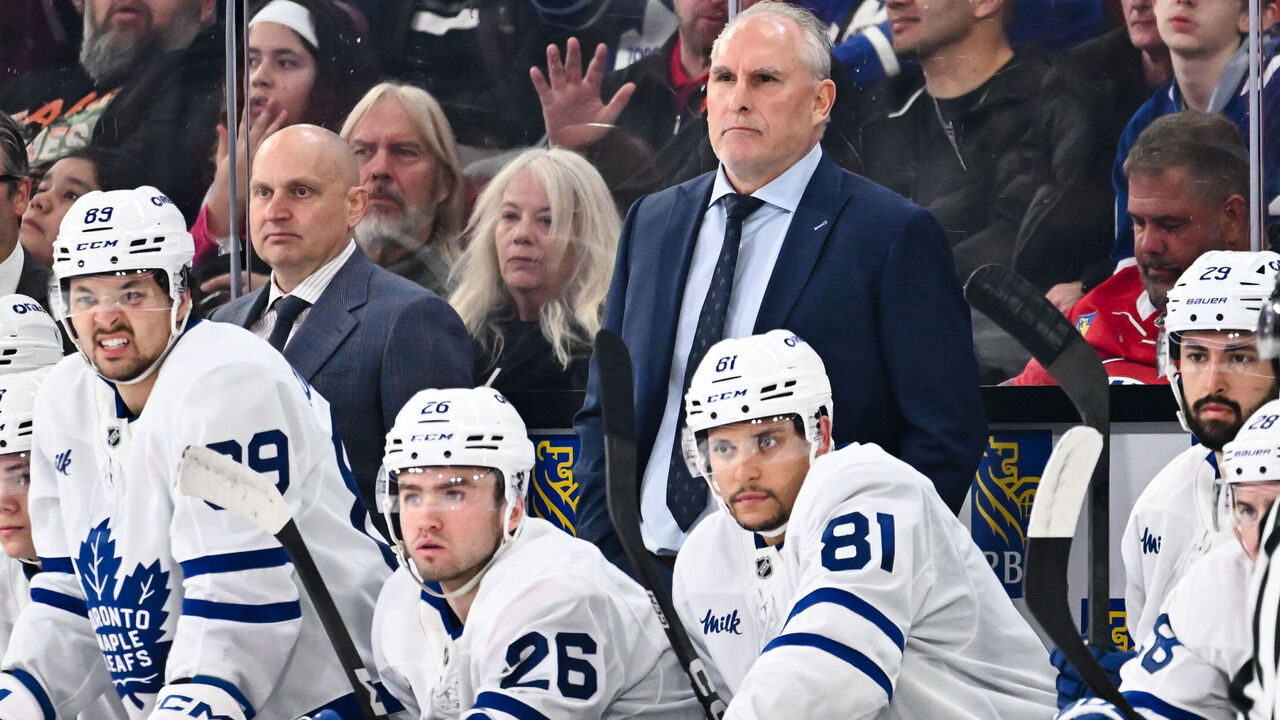
Reader Frank D. recently asked about shaking up an NHL front office.
At what point do changes need to be made at the front office level for a club - GM/president? How and when should these changes happen?
A team owner will ordinarily task its leading hockey executive with handling three main things: creating a clear-eyed plan for building a Cup contender, executing on said plan thoughtfully and in a sustainable fashion, and managing external (fans, media) and internal expectations along the way.
An owner also wants progress. Months of inaction, especially if the plan goes sideways and a new path must be charted ASAP, tends to not be tolerated.
A coach can "lose the room" if his message to the players gets stale. The GM equivalent involves players, coaches, fans, and media losing faith in the direction of the franchise. Often, the issue is that the team is directionless.
If you're looking for a current example of a club needing to make a change, look no further than the Maple Leafs. GM Brad Treliving's short- and long-term plans would never be described as particularly thoughtful; he's failed to effectively manage expectations in a high-intensity Canadian market; and he's neither executed on the original plan nor cleanly pivoted to something new.
What do you want to know, hockey fans?
There are three ways to submit a question for future NHL Inbox editions.
- Comment on this article in theScore app
- Email John at [email protected]
- Send John a message on X (@matiszjohn)