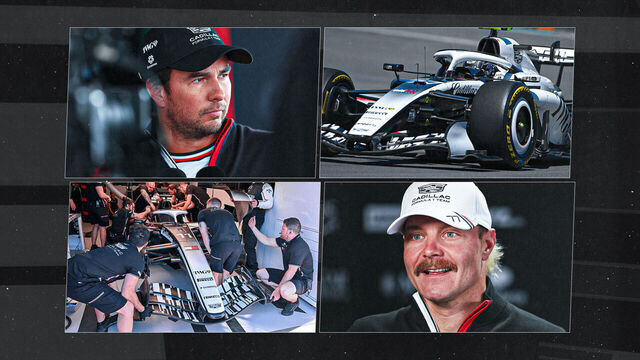
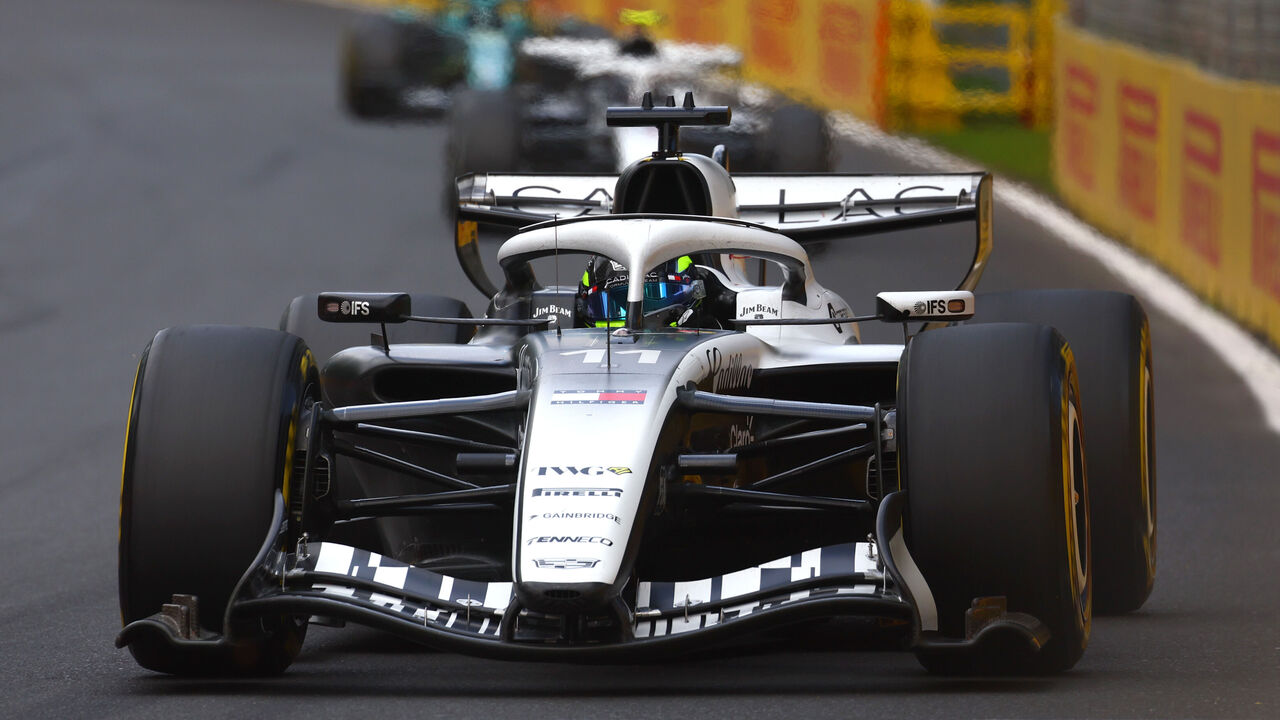
The Cadillacs emerge from the garages for the first time Friday during free practice at the Canadian Grand Prix. The weekend has just begun, but for Cadillac, F1's newest team, this is only the latest checkpoint in a never-ending race against time. Although the journey to reach this moment goes unnoticed by most, it's one that has spanned months and rarely features enough time to cherish the milestones.
April 2025
Peter Crolla's first day as Cadillac's race team manager was April 1, 2025. His mission: assemble a functional operations unit capable of getting the team to its 2026 debut. It's a familiar position for Crolla, who did a similar job for Haas' F1 entry about a decade prior. Many members of the team, like Crolla, couldn't resist the allure of helping shape its identity.
"Everybody's come here from existing teams, and they've got great experience, great ideas, but we don't have any 'We've always done it that way' kind of ethos here," Crolla told theScore at the Canadian GP. "We've never done anything any particular way. So, we wanted to bring people's suggestions and ideas together and create our own first time of doing everything.
"It's not for everybody. It's certainly a lot more challenging than going into an existing team where you effectively just become another cog in the machine. We want people to be their own cog and decide the speed that they spin at."
January 2026

Cadillac's F1 debut was under two months away, but its first race against time had a firm deadline of Jan. 12, 2026 - the day when its debut car, the MAC-26, was scheduled to complete its first laps at the Silverstone Circuit. Crolla kept busy during this time, acquiring assets - equipment, tools and personnel - and logistically planning Cadillac's on-track debut.
While Crolla says he doesn't have a specific event to reference when asked for the team's most chaotic moment, joking that he's paid to avoid those ordeals, he acknowledges the buildup to Silverstone as a "massive challenge" and the "most hardcore period" for himself.
"It's (a challenge) that we succeeded in," Crolla said. "The day we were supposed to run the car for the first time, we ran the car for the first time. Was it a smooth day? No. Did we expect it to be? I think we'd be in the wrong jobs if we did. You can't underestimate the scale of the challenge of doing it for the first time, but that was a big moment for us."
Cadillac had just completed its first race against the clock.
March 2026
Shortly before the Silverstone run, Cadillac made another addition to its team, bringing in former Sauber pilot Zhou Guanyu as its reserve driver. Like its full-time drivers, Sergio Perez and Valtteri Bottas, Zhou sought the best opportunity to rewrite his career following a previous stint in F1.
Before the drivers could do that, though, Cadillac had to make it to Australia and not only run the car again but prove it belonged in F1, a herculean task for the series' newest member.
Cadillac's drivers faced many unique obstacles in preparation. Unlike other clubs, Cadillac's simulator lacked previous data for correlation. And with new regulations on the horizon, racking up as many laps as possible in the preseason proved crucial. Cadillac completed 3,247 km, more than 10 race distances, over 11 days of testing leading up to Australia. Yet the team remained far from being able to employ the tool like its rivals down the pit lane.
"This year, we are focused a little bit more on trackside than in the simulator," Zhou told theScore at the Canadian GP. "My previous team, there was a lot of relying on the simulator because they had it for over five, 10 years. But for us, firstly, we're making sure (with) the car we're improving performance, but secondly, we're trying to get the simulator as similar to the car on track, which always takes a couple years. It takes a long time because the whole simulator project started just under two years ago.
"All these things, it takes time. Obviously, simulator being a very important tool, but it can really guide you in the wrong direction. That's why we're trying to be quite careful."
Cadillac officially made its F1 debut March 6 when both cars went out for Free Practice 1. Despite Crolla saying that getting to Melbourne was the "biggest challenge," he revealed that the moment was "a little less emotional" than he'd anticipated. His focus had already shifted toward the next task.
"I think we didn't really have time to absorb the emotion of it," Crolla explained. "You cross one hurdle, then you prepare for the next one. Australia was a big deal, and the fact that we put two cars out in FP1 on time, that was a massive achievement. But you don't have time to sit there and think how great it was because you're then getting ready for the next session and the next session and then the race and then the next event after that."
Cadillac checked off another milestone a few days later, finishing a grand prix in its first race weekend after Perez placed 16th in Australia. There may not have been much time to soak it all in, but Zhou says the achievement was "quite a special moment" for the team.
May 2026 and beyond
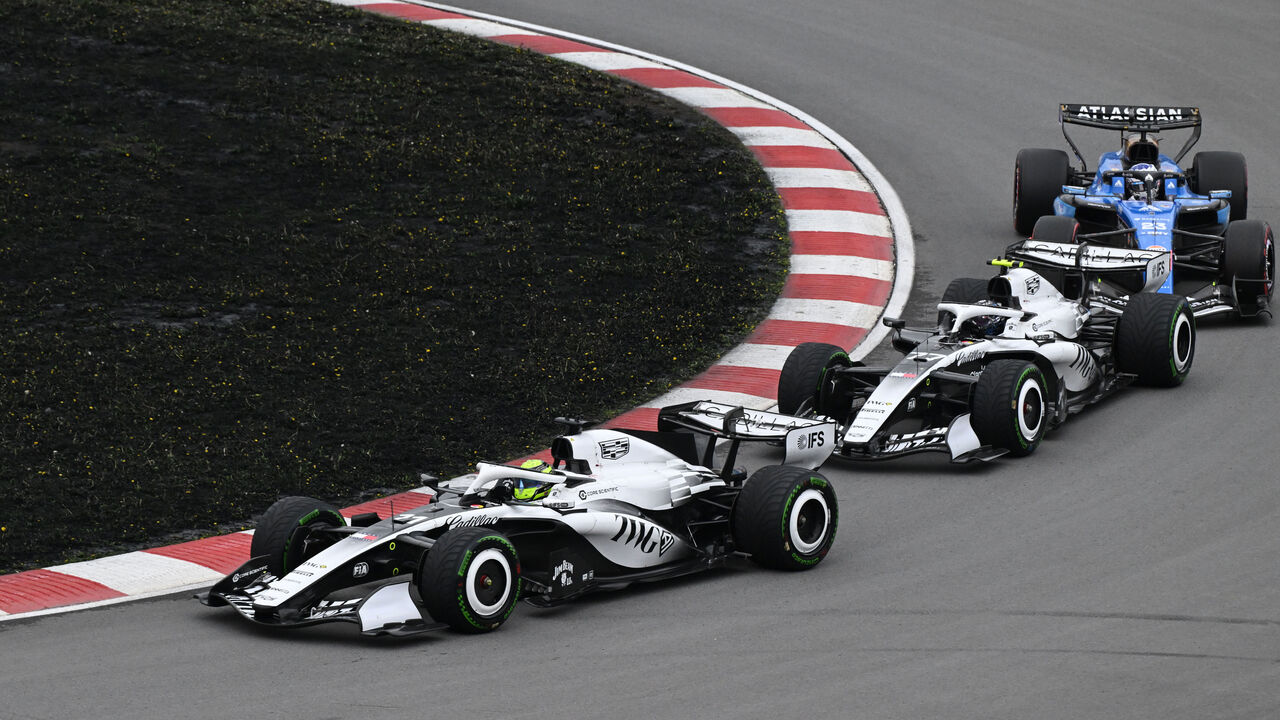
Over two months have passed since Cadillac's debut, and the race against time continues in Canada for Crolla and his squad. Sea freight left the Silverstone factory weeks ago, first stopping in Miami for the grand prix and then Montreal. Thirty tons of air freight also came from Miami. In Montreal, Crolla's team must begin building Cadillac's hospitality, garage, and everything in between the weekend prior to the race.
Cadillac is now fully a part of F1's traveling circuit, but its metrics of success have evolved since Australia. The team still hasn't scored points, though more impressively, it has looked the part of a functional F1 operation. Bottas and Perez both completed three straight races from China to Miami, which has given the team bigger dreams to chase. In fact, some in the sport think Cadillac is outperforming its own expectations.
"We've come out the blocks respectfully. I think that's the first pillar of what we're here to do," Crolla said. "The search now is for reliability and performance. They're the second and third pillars, and I think we're on target. Some people say that we are overachieving, in that sense, because this is a big sport. It's fierce competition, and there's some huge organizations that we're up against. While you very rarely meet your targets and objectives, I think we're doing a pretty decent job of it so far."
Cadillac ultimately didn't score points in Canada, but there's been little time to dwell on the result; the team's attention had already turned to Monaco long before the chequered flag waved in Montreal. The outfit packed up air freight that Sunday night, with sea freight preparation running through Monday. The freight then returned to base Tuesday. The following Saturday, the race cars were sent to Monaco, where Crolla's prebuild team had been waiting. By now, the timer for the upcoming races in Barcelona and Austria, where an upgrade package will be introduced, has already begun.
"It's like this never-ending cycle, and you never really get to a point of complete, stationary movements," Crolla said. "Something is always moving, everywhere (at) every time."
Daniel Valente is theScore's lead Formula 1 writer. Follow him on X at @F1GuyDan.